
Adherence to a healthy diet is a key modifiable lifestyle factor known to slow the progression of cognitive decline in otherwise healthy older adults. Dietary patterns such as the Mediterranean diet, the Dietary Approaches to Stop Hypertension (DASH) diet, and the Mediterranean–DASH Intervention for Neurodegenerative Delay (MIND) diet have been associated with slower cognitive decline and a reduced risk of dementia. A common feature of these dietary patterns is the regular consumption of nuts, which are recognized for their nutrient-dense profiles.
Previous studies have demonstrated that a 16-week dietary intervention with mixed nuts increased cerebral blood flow, a physiological marker of brain vascular function, and improved cognitive performance in the memory domain. Peanuts, in particular, are rich in protein and contain high amounts of L-arginine, a precursor for nitric oxide synthesis, which plays a critical role in vascular function and regulation of blood flow.
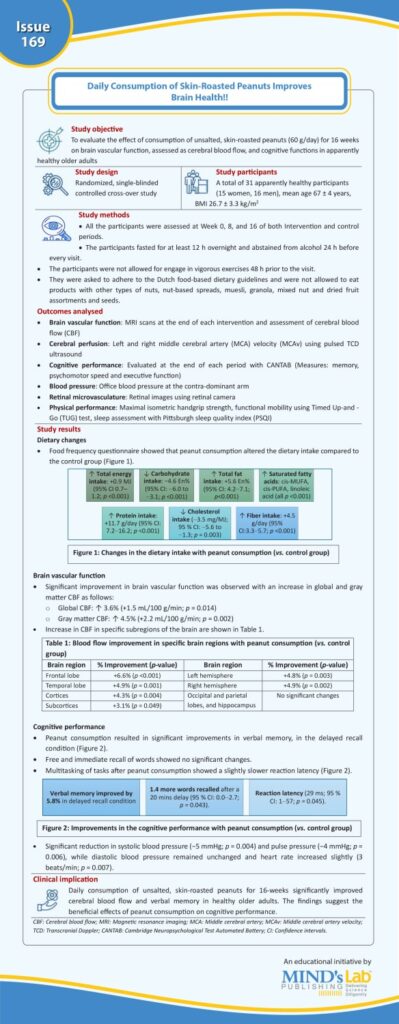
A recent study published in Clinical Nutrition demonstrated that consumption of skin-roasted peanuts for 16-weeks improved brain vascular function by 3.6% and verbal memory by 5.8% in healthy older men and women, which highlighted the beneficial effect of peanut consumption on cognitive performance (see the Graphic for the study snapshot).
Source: Kerkhof L, Mensink RP, Plat J, Nijssen KMR, Joris PJ. Longer-term skin-roasted peanut consumption improves brain vascular function and memory: A randomized, single-blind, controlled crossover trial in healthy older adults. Clin Nutr. 2025;55:170-79.