


Childhood obesity is increasing at alarming rates, with approximately 12.7% of children aged 2–5 years classified as overweight. This has significant implications for both immediate and long-term health outcomes. Although parental stress and obesity are recognized risk factors for early childhood obesity, effective strategies to mitigate this risk remain insufficiently defined. Most parent-focused early childhood obesity prevention programs primarily emphasize improving dietary habits and reducing sedentary behaviours in children, often overlooking the impact of parental stress on the eating patterns and weight status of children.1
Parental stress may represent a critical third component, along with nutrition and physical activity, necessary for maintaining healthy child growth and weight. Therefore, parental stress should be directly addressed in early childhood obesity prevention interventions.1
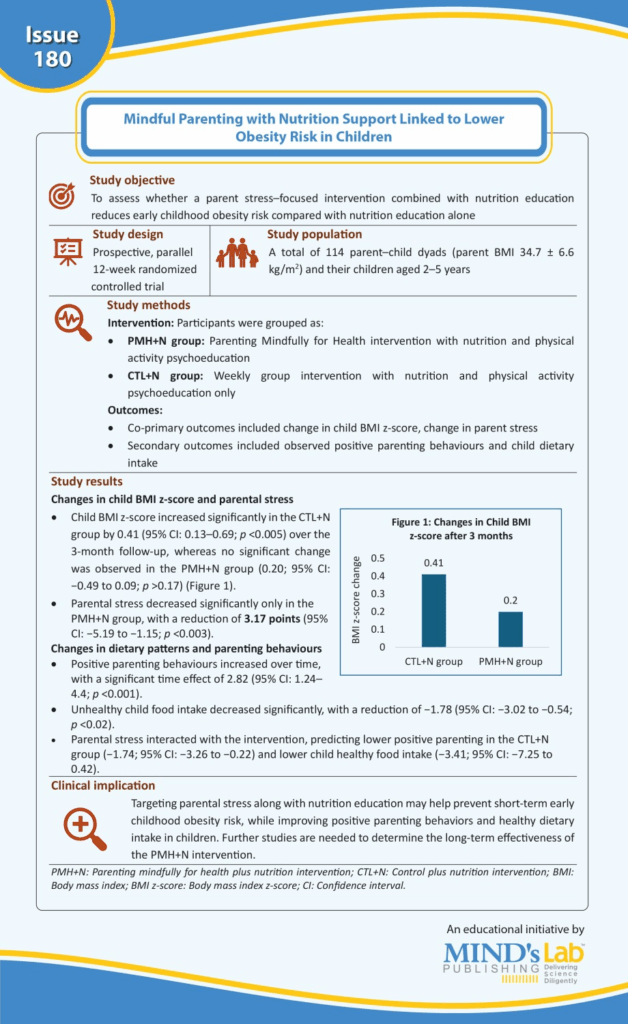
A recent study published in the journal “Pediatrics” published by the American Academy of Pediatrics demonstrated that a manual-guided Parenting Mindfully for Health plus Nutrition (PMH+N) intervention implemented over 12 weeks reduced the risk of childhood obesity while also improving positive parenting practices and dietary intake of the children. The findings suggest that the PMH+N program may be a promising strategy for early childhood obesity prevention, warranting further evaluation to determine its long-term and sustained effects on obesity risk in young children (see Graphic).1,2
(Sources: 1. Diana Swift. Parent stress emerges as a key factor in child obesity [Internet]. Medscape Medical News. 2026 Mar 7 [cited 2026 Mar 13]. Available from: https://www.medscape.com/viewarticle/parent-stress-emerges-key-factor-child-obesity-2026a1000711 2. Fogelman N, Bernstein H, Bautista T, et al. Mindfulness Intervention for parent stress and childhood obesity risk: A randomized trial. Pediatrics. 2026 Mar 6:e2025072230. Doi: 10.1542/peds.2025-072230)