

Dementia significantly affects the quality of life in older adults, with global cases projected to reach nearly 150 million by 2050. Early prevention through modifiable lifestyle factors, particularly diet, has gained increasing attention.
While unhealthy dietary habits such as high intake of red and processed meat have been linked to poorer cognitive outcomes, healthier diets appear to reduce the risk of cognitive impairment. However, evidence remains inconsistent, especially regarding emerging dietary patterns such as plant-based and planetary health diets. Additionally, limited studies have evaluated multiple dietary patterns within the same population, highlighting the need for comprehensive analysis to optimize dietary strategies for better cognitive health.
A recent study published in JAMA reported that greater adherence to healthy dietary patterns in mid-adulthood (age 45–54 years) is associated with a lower risk of subjective cognitive decline (SCD) and better cognitive function in later years. Higher adherence to all six dietary patterns was linked to reduced SCD risk, with the DASH diet showing the strongest association (RR: 0.59; 95% CI: 0.57–0.62, comparing highest vs. lowest adherence), followed by the healthful plant-based diet index (hPDI), reverse empirical dietary index for hyperinsulinemia (rEDIH), planetary health diet index (PHDI), AHEI-2010, and rEDIP (See graphic).
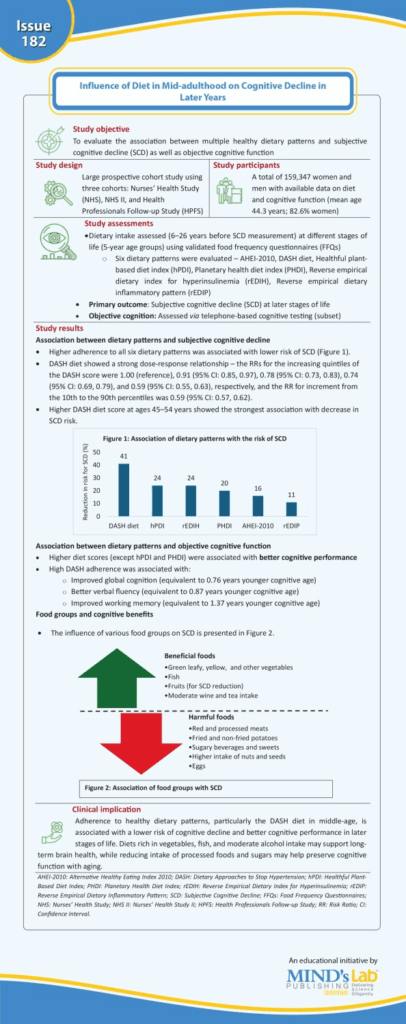
(Source: Chen H, Cortese M, Flores-Torres MH, Tessier AJ, Wang DD, Kang JH, Eliassen AH, Stampfer M, Ascherio A, Willett W, Yuan C, Bjornevik K. Dietary patterns and indicators of cognitive function. JAMA Neurol. 2026 Feb 23:e260062. Doi: 10.1001/jamaneurol.2026.0062)