

Alcohol consumption is a major global public health concern and a leading preventable cause of premature death and disability. While the harmful effects of heavy drinking are well established, alcohol consumed in moderation is often perceived as relatively safe. However, growing evidence suggests that even low-to-moderate alcohol intake may contribute to a range of adverse health outcomes, including cancer, cardiovascular disease, liver disease, and injuries, highlighting ongoing uncertainty regarding safe levels of consumption.
To provide updated estimates of alcohol-related health risks, researchers conducted the Alcohol Intake and Health Study, a comprehensive U.S. risk assessment integrating national alcohol consumption, mortality, and morbidity data. The study found no protective net health benefit at any level of alcohol consumption, with risks of premature death and disability increasing even at levels commonly considered “moderate.” The findings support recommendations that adults who drink should limit intake to no more than one drink per day.
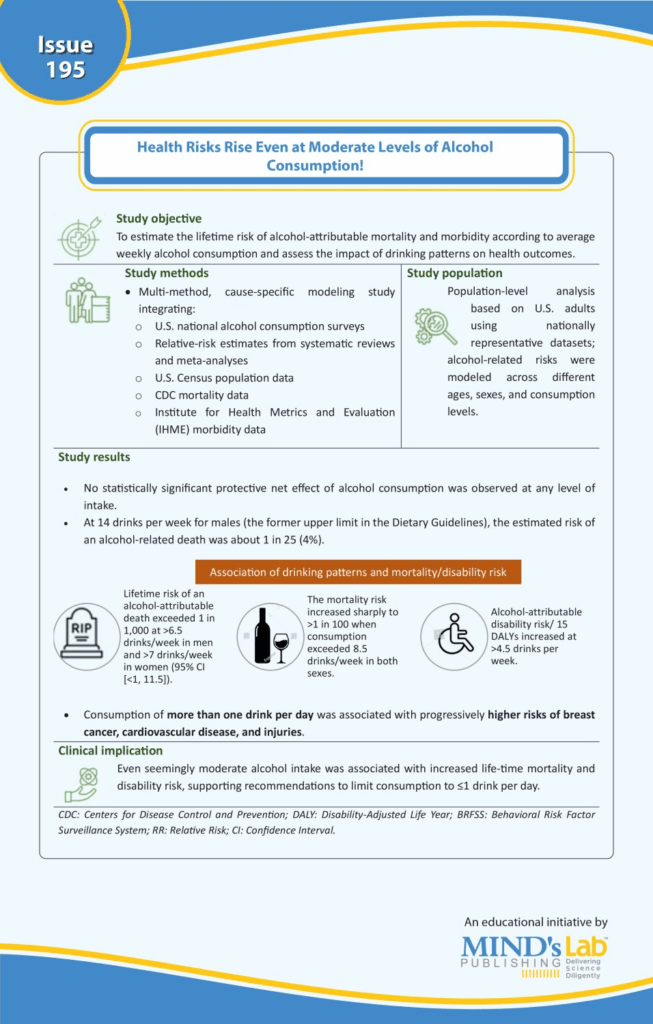
(Source: George S, Naimi TS, Keyes K, et al. Alcohol Intake and Health Study: No Protective Effectat Low Levels, With Mortality Increasing to 1 in 25 at 14 Drinks Per Week. J Stud Alcohol Drugs. 2026;87(4):621-638.)