

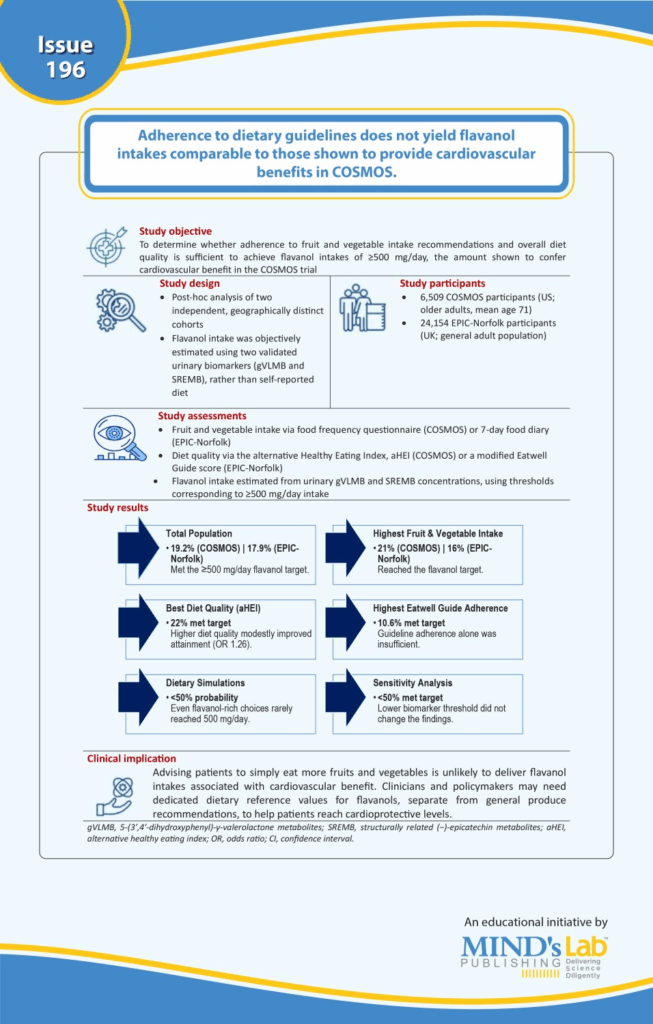
Adherence to current dietary guidelines for fruit and vegetable intake does not achieve flavanol intake levels linked to cardiovascular benefit, according to a new study in Food & Function. The findings suggested that specific dietary reference values for flavanols may be needed to realize the benefits seen in the landmark COSMOS trial.
Researchers from the University of Reading and collaborating institutions analyzed biomarker data from two large cohorts: COSMOS (US; n=6,509) and EPIC-Norfolk (UK; n=24,154) using validated urinary biomarkers (gVLMB and SREMB) to objectively estimate flavanol intake. Fewer than 25% of participants meeting dietary guidelines reached the 500 mg/day flavanol threshold shown to reduce cardiovascular mortality by 27% in COSMOS.
Even in the highest quartile of fruit and vegetable intake, only 21% (COSMOS) and 16% (EPIC-Norfolk) met this threshold. Diet quality showed the same pattern: the top aHEI quartile in COSMOS reached just 22% (OR 1.26, p<0.001), while in EPIC-Norfolk, the highest adherence to the Eatwell Guide score corresponded to the lowest attainment. Simulations of typical US produce consumption confirmed that reaching 500 mg/day of flavanols through diet alone is unlikely, even when selecting flavanol-rich foods.
The study highlighted that flavanol content varies dramatically within the same fruit and vegetable varieties. For example, (−)-epicatechin levels in a single apple cultivar can fluctuate more than 10-fold. The authors concluded that while current dietary guidelines effectively promote overall fruit and vegetable consumption, they do not ensure sufficient intake of specific bioactives such as flavanols. These findings support the need for targeted dietary recommendations or optimized agricultural practices.
Source: Ottaviani JI, Erdman JW Jr, Steinberg FM, Manson JE, Sesso HD, Schroeter H, et al. Adhering to dietary guidelines does not yield flavanol intake levels associated with beneficial cardiovascular effects. Food Funct. 2026;17(12):5715-5725. doi: 10.1039/d6fo00867d.