

A new study suggests that eating a vegan diet, even for a short time, may help lower inflammation and slow biological aging. The effects appear to work through DNA methylation, chemical tags that sit on DNA and help switch genes on or off without changing the genetic code itself.
Researchers studied 48 healthy adults. After a week on the same standard diet, participants were randomly assigned to eat either a vegan diet or a meat-rich diet for one month. Both diets provided similar calories, so researchers could examine the effect of food choices rather than weight change. They scanned more than 800,000 DNA methylation sites across the genome before and after the diet change.
People on the vegan diet showed fewer neutrophils and more CD4+ T cells, a pattern consistent with a less inflammatory state. The vegan group also showed changes in genes tied to cancer-related pathways, cell growth, insulin signaling, DNA repair, and the body’s response to stress.
To estimate biological age, the researchers used epigenetic clocks, mathematical models built from DNA methylation patterns. Two of these clocks suggested that biological aging slowed in the vegan group, while a third clock showed the opposite: faster aging. Because different clocks capture different aspects of aging, the findings should not be read as proof that a vegan diet reverses aging, only that a short-term diet change can shift some of the molecular markers that researchers use to study the same.
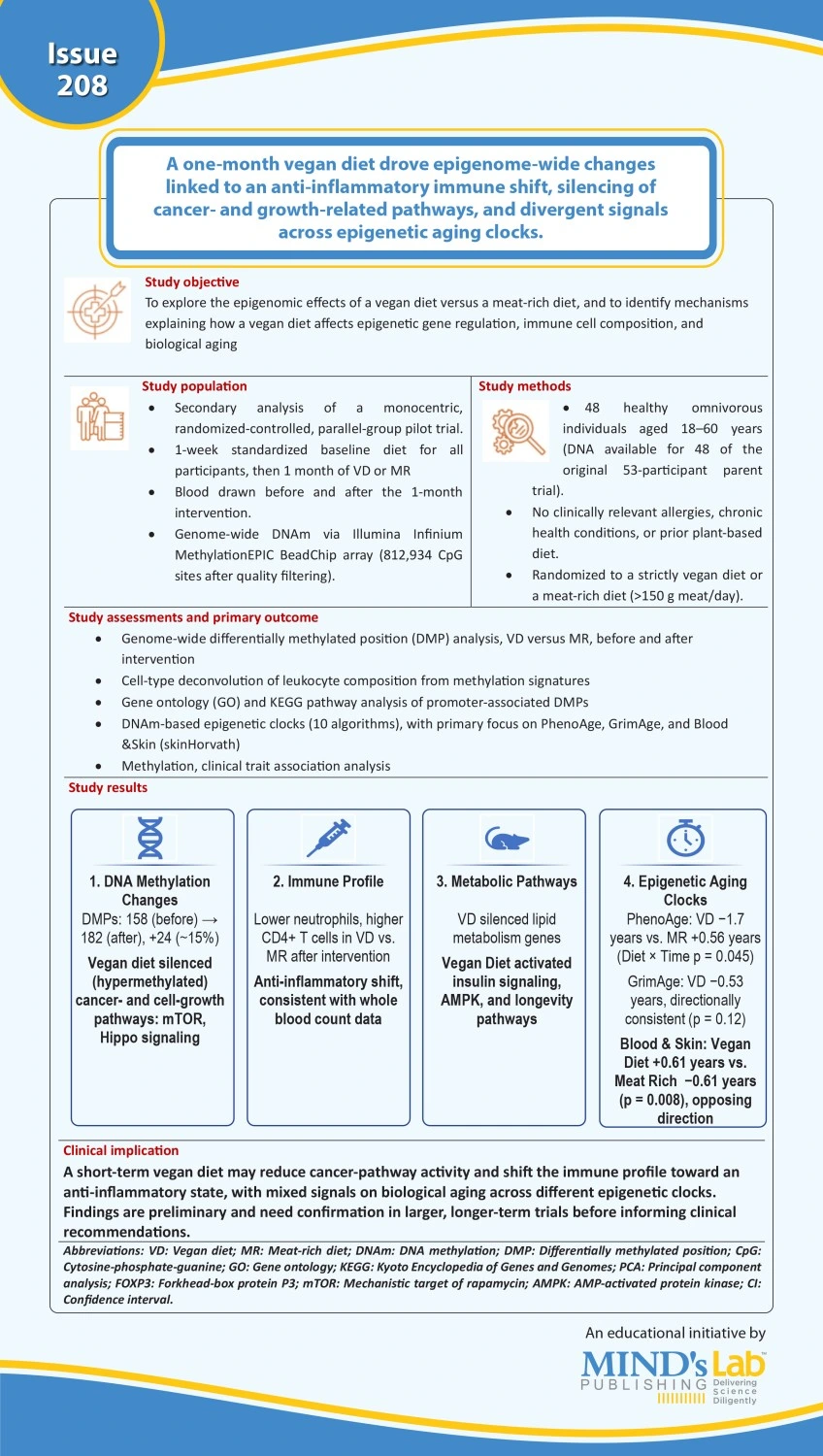
Source: Karbacher L, Mertens J, Kowarschik S, Lederer AK, Ku M, Huber R, Storz MA. A Vegan Diet Epigenetically Modulates Inflammatory Pathways and Biological Aging: Genome-Wide DNA Methylation Analysis of a One-Month Isocaloric Vegan Versus Meat-Rich Dietary Intervention. MedComm. 2026;7(8):e70899. doi: 10.1002/mco2.7089