


Fatigue and reduced physical capacity are common among older adults with obesity and can adversely affect mobility, physical function, independence, and quality of life. As obesity and ageing often coexist with declining muscle function and cardiorespiratory fitness, everyday activities may require greater effort, potentially contributing to reduced activity and further functional decline. Perceived physical fatigability refers to the fatigue experienced in response to a specific physical task and, unlike general fatigue, provides a task-specific measure of physical function associated with mobility limitations, reduced physical activity, and disability in older adults.
Weight loss and increased physical activity are established components of lifestyle management for older adults with obesity. While weight loss may reduce the physical demands of movement, different approaches to increasing physical activity, including structured aerobic exercise and reducing prolonged sedentary periods by distributing activity throughout the day may have distinct effects on physical function and fatigability. However, evidence on whether these strategies reduce perceived physical fatigability, particularly alongside intentional weight loss, remains limited.
A recent randomized clinical trial published in Obesity journal evaluated whether weight loss combined with different physical activity strategies could improve perceived physical fatigability among older adults with obesity. The study found that weight loss combined with increased physical activity significantly reduced perceived physical fatigability in older adults with obesity. These improvements were largely sustained over 18 months, with no significant difference between the physical activity strategies.
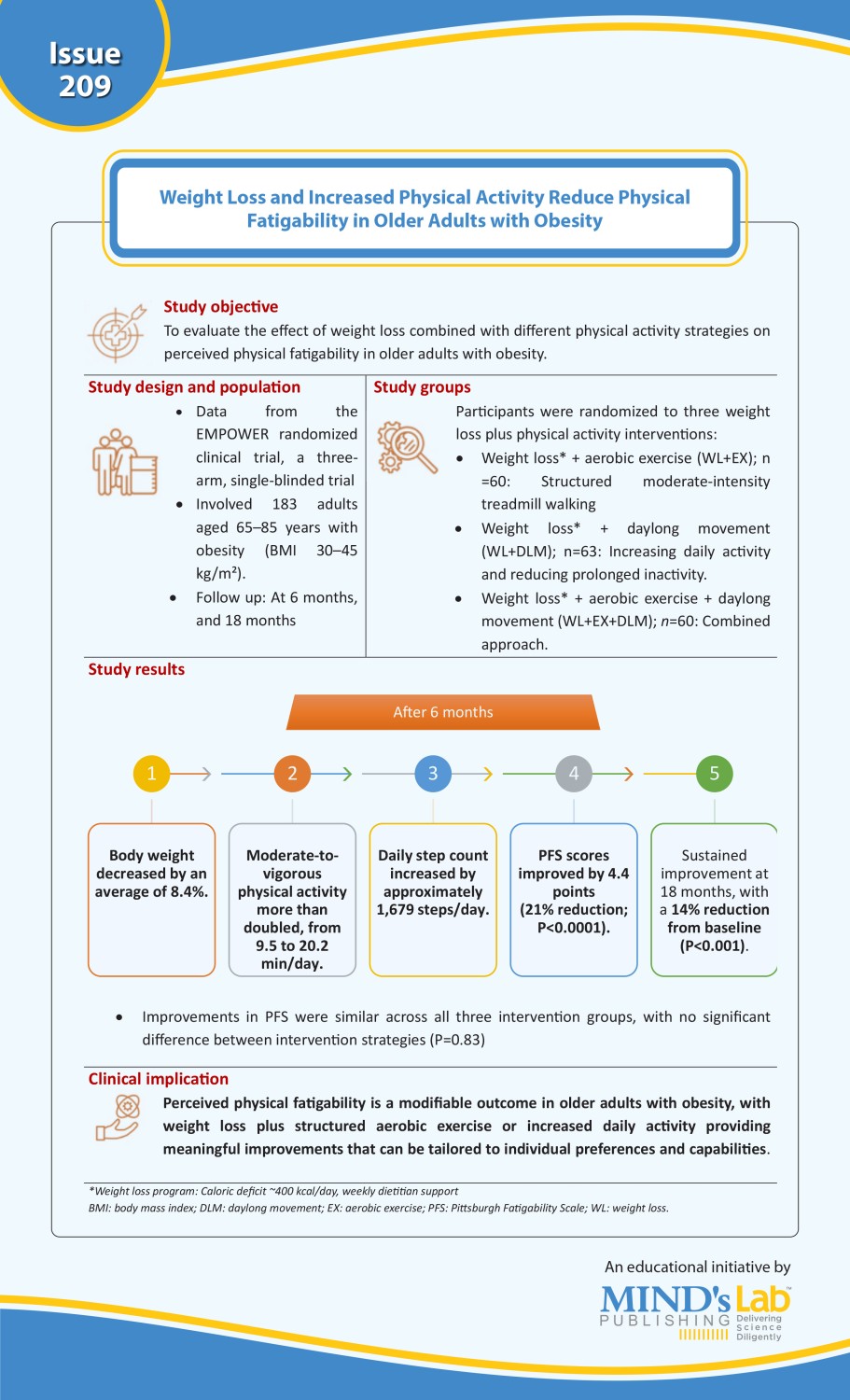
(Source: Garcia RE, Fanning J, Kang C, et al. Weight loss and physical activity reduces perceived physical fatigability among older adults with obesity. Obesity. 2026;0:1-11. doi:10.1002/oby.70298.)