


Ultra-processed foods (UPFs) have become an increasingly prominent component of modern diets because of their convenience, affordability, palatability, and extended shelf life. These industrially formulated products, including packaged snacks, confectionery, and ready-to-eat foods, often contain high levels of added sugars, salt, and fats while providing relatively little dietary fibre and essential nutrients.
Growing evidence suggests that excessive UPF consumption may contribute to several chronic health conditions, including cardiovascular disease, hypertension, obesity, diabetes, and cancer. These conditions frequently coexist, increasing the burden of multimorbidity and complicating long-term disease management. However, uncertainties remain regarding the overall health risks associated with UPFs and whether increasing consumption is associated with progressively greater disease risk.
A recent systematic review and dose-response meta-analysis published in Family Medicine and Community Health, involving nearly 8.8 million adults, examined the association between ultra-processed food (UPF) consumption and multiple chronic diseases. The findings revealed that higher UPF consumption was associated with increased risks of cardiovascular disease, obesity, diabetes, cancer, depression, digestive disorders, and all-cause mortality.
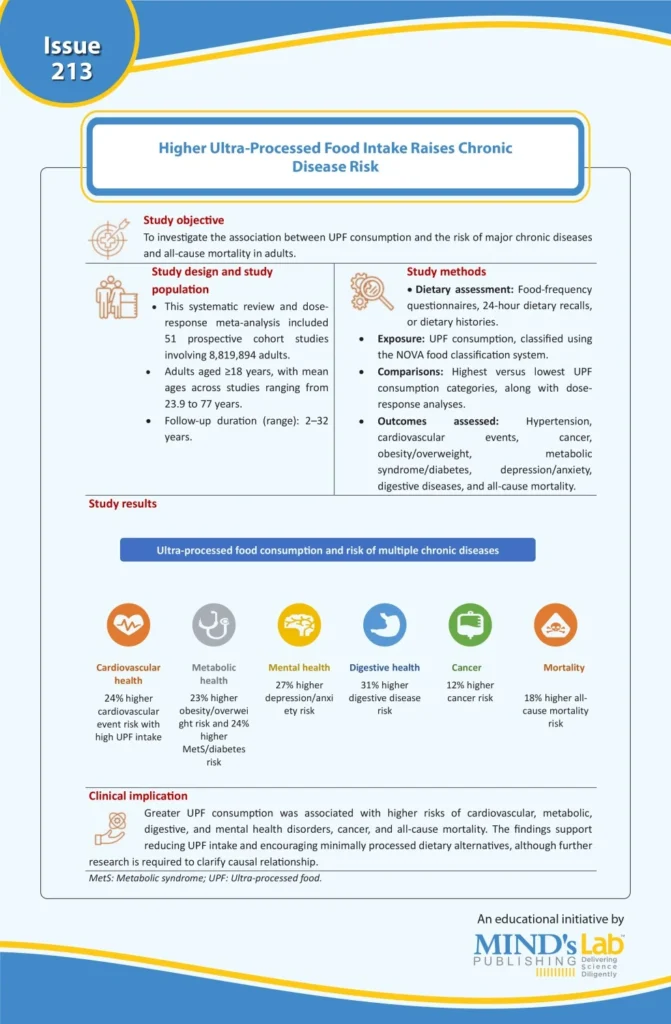
(Source: Liu X, Luo S, Zeng Y, et al. Ultra-processed food consumption and risk of multiple chronic diseases among 8,819,894 adults from 51 prospective cohorts: a dose-response meta-analysis. Fam Med Community Health. 2026;14:e003925. doi:10.1136/fm