

A plant-rich Green Mediterranean (Green-MED) diet may improve folate status and cardiometabolic health, according to an 18-month secondary analysis of the DIRECT-PLUS randomized controlled trial published in Clinical Nutrition.
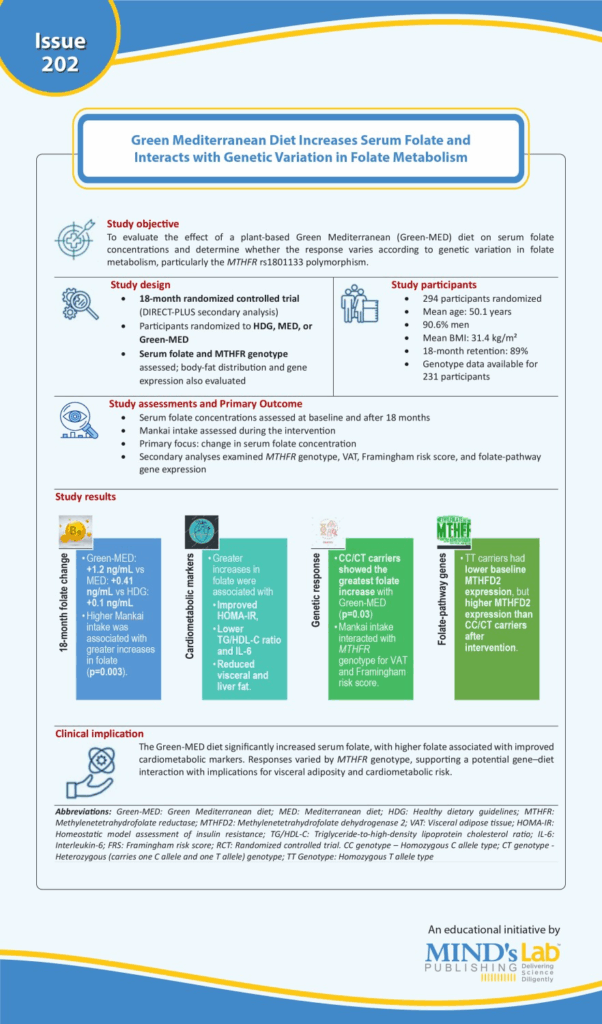
Researchers analysed 294 participants randomized to healthy dietary guidelines, a Mediterranean diet, or a Green-MED diet. The Green-MED diet included reduced red and processed meat intake, 28 g/day of walnuts, 3–4 cups/day of green tea, and a daily Mankai (Wolffia globosa) shake – commonly termed as Asian watermeal or Panidala in India.
After 18 months, serum folate increased by 1.2 ng/mL with Green-MED, compared with 0.41 ng/mL with the Mediterranean diet and 0.1 ng/mL with healthy dietary guidelines. Evidence shows that folate increases were associated with better insulin sensitivity, a lower triglyceride-to-HDL cholesterol ratio, lower interleukin-6 levels, and reductions in visceral, deep subcutaneous, and intrahepatic fat.
Researchers also identified a potential interaction between MTHFR rs1801133 genotype and Mankai intake. CC/CT carriers showed the greatest folate increase with Green-MED, while TT carriers had lower folate concentrations. Mankai intake interacted with MTHFR genotype on changes in visceral adipose tissue and Framingham risk score, with dose–response benefits observed among CC/CT carriers.
These findings suggest that a plant-rich Green-MED diet may improve folate status and cardiometabolic markers, while potentially influencing folate metabolism according to genetic background.
Source: Zelicha H, Keller M, Meir AY, Rinott E, Tsaban G, Kaplan A, et al. Effect of green mediterranean diet on serum folate and its interaction with genetic variation in folate metabolism: The DIRECT PLUS 18-month dietary randomized controlled trial. Clin Nutr. 2026 Aug;63:106701. doi: 10.1016/j.clnu.2026.106701.