


Overweight and obesity have emerged as major global public health challenges, substantially increasing the risk of cardiovascular disease, type 2 diabetes, hypertension, and other chronic metabolic disorders. Although lifestyle interventions traditionally focus on diet and physical activity, growing evidence indicates that sleep duration is a critical determinant of body weight regulation and metabolic health. 1
Chronic insufficient sleep has become increasingly prevalent in modern society, with a considerable proportion of adults routinely sleeping less than the recommended 7–9 hours per night. Experimental and epidemiological studies suggest that inadequate sleep disrupts energy balance by increasing caloric intake, promoting unhealthy dietary choices, and altering appetite-regulating hormones such as leptin and ghrelin, thereby favouring weight gain. Despite these observations, most previous studies have been observational or limited to short-term sleep restriction, leaving uncertainty regarding the long-term causal effects of sustained sleep loss on body weight and body composition.1
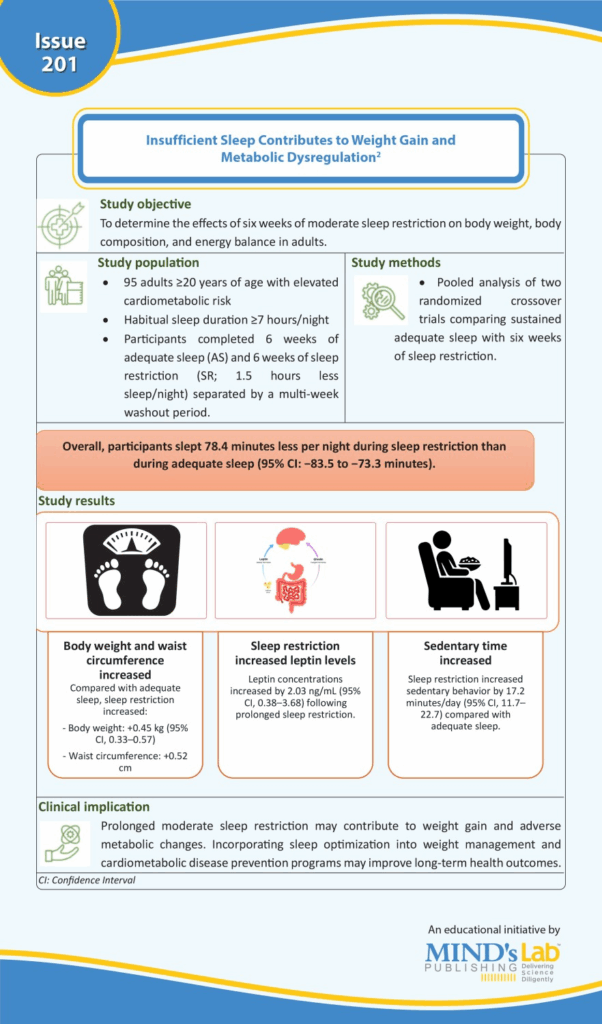
A recent pooled analysis of two randomized crossover trials published in the Annals of Internal Medicine evaluated the effects of six weeks of moderate sleep restriction on body weight, body composition, and energy balance in adults at elevated cardiometabolic risk. The study demonstrated that prolonged sleep restriction resulted in significant increases in body weight, waist circumference, sedentary time, and leptin levels, supporting adequate sleep as an important strategy for weight management and cardiometabolic disease prevention.2
References:
1. Li Q. The association between sleep duration and excess body weight of the American adult population: a cross-sectional study of the national health and nutrition examination survey 2015-2016. BMC Public Health. 2021 Feb 11;21(1):335. doi: 10.1186/s12889-021-10369-9.
2. Zuraikat FM, Scaccia SE, Cochran JA, et al. Prolonged Short Sleep and Its Effect on Body Weight and Composition: A Pooled Analysis of Randomized Trials. Ann Intern Med. Published online July 7, 2026. doi:10.7326/ANNALS-25-01660.