

Mental health disorders, such as anxiety and depression, are becoming increasingly common worldwide. Lifestyle and dietary factors, including coffee consumption, are being explored for their role in mental health, though evidence has been inconsistent.
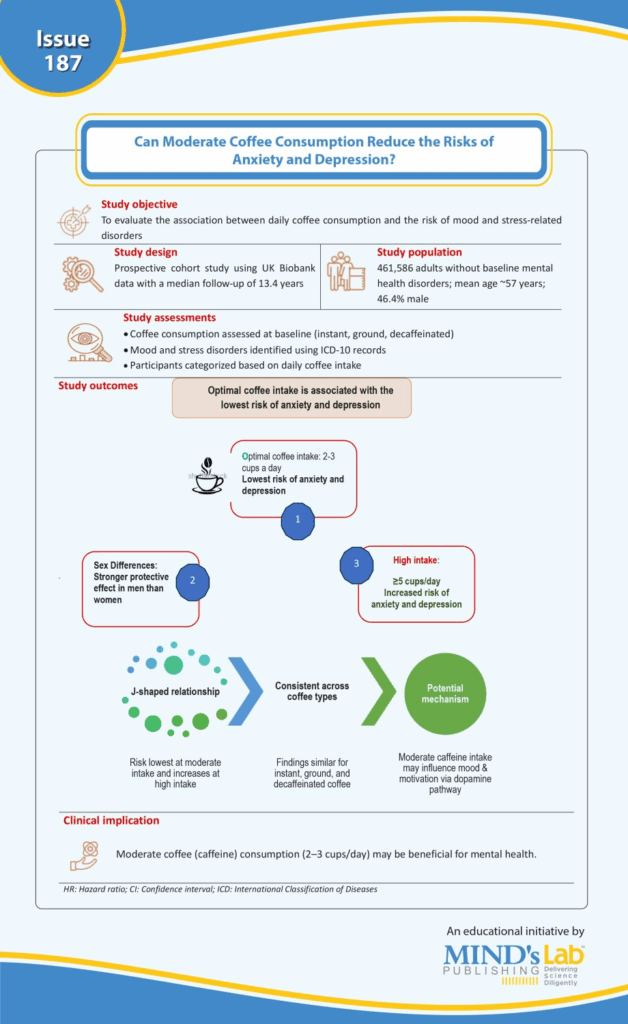
Emerging evidence suggests a J-shaped relationship, in which moderate intake may be beneficial, whereas higher intake may be harmful. Coffee contains bioactive compounds that influence brain function and mood regulation.
A large prospective study involving 461,586 participants from the UK Biobank found that consuming 2–3 cups of coffee per day was associated with the lowest risk of anxiety and depression, whereas an intake of ≥5 cups per day was linked to an increased risk. These findings were consistent for different coffee types.
Overall, moderate coffee consumption may support mental well-being, highlighting the importance of a balanced intake.
Source: Song BR, Xu X, Chen J, Wang Y, Chen Y, Zhang Z, Han C, Dong H, Gao X, Sun L. Daily coffee drinking and mental health outcomes: Sex differences and the role of caffeine metabolism genotypes. J Affect Disord. 2026 Apr 15;399:120992. doi: 10.1016/j.jad.2025.120992.