


Chronic stress and late-night snacking may adversely affect gut microbiome health. The impact of snacking on health may be influenced by both the quality and quantity of foods consumed; however, the timing of snacking, particularly when late at night, can affect digestive health and the gut microbiome. The possible mechanisms by which the combination of chronic stress and late-night eating can influence digestive health are attributed to the disruption of the body’s internal clock (its 24-hour circadian rhythm), the two-way gut-brain axis communication involving nerves, hormones, and gut bacteria, and alterations in gut microbial diversity.
A study conducted by Dadigiri H, et al., presented at the Digestive Disease Week 2026 (May 2–5, 2026, Chicago), found that the combination of chronic stress and late-night eating was associated with a higher likelihood of abnormal bowel habits and reduced gut microbial diversity. Individuals with high levels of physiological stress (allostatic load) who consumed more than 25% of their daily calories after 9 PM were 1.7 to 2.5 times more likely to experience abnormal bowel habits, such as constipation or diarrhea, and showed significantly reduced gut microbial diversity, as measured by the Shannon Index.
The findings highlight meal timing as an important factor in digestive health. Regular late-night eating, particularly during periods of chronic stress, may increase the risk of bowel dysfunction and reduce gut microbial diversity. Maintaining consistent meal schedules may be a simple strategy to support gut health.
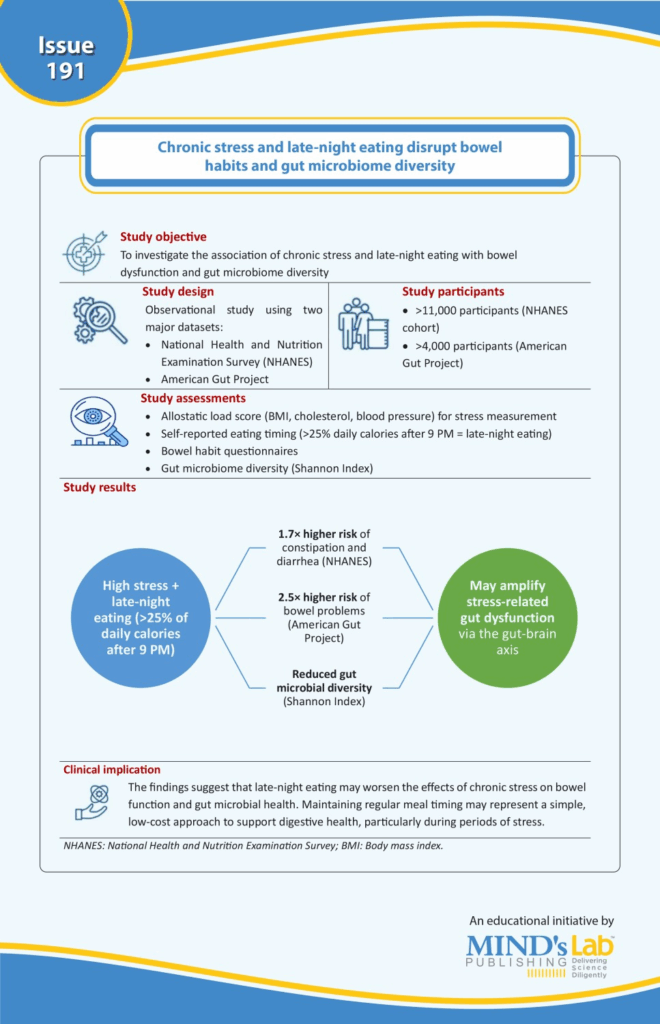
(Source: Dadigiri H. Beyond sleep alone: How stress and late-night eating disrupt bowel habits and gut microbiome diversity, a multi-cohort study. To be presented at: Digestive Disease Week (DDW) 2026; May 2–5, 2026; Chicago. Abstract Mo1769.)