

Tea is one of the most widely consumed beverages worldwide and has been an integral part of dietary habits across cultures for centuries. Beyond its popularity, tea is a rich source of naturally occurring bioactive compounds, particularly flavonoids such as catechins, theaflavins, anthocyanins and flavonols. 1
These compounds possess antioxidant and anti-inflammatory properties and may help counter oxidative stress and influence pathways involved in the development of chronic diseases. Consequently, tea consumption has attracted considerable research interest for its potential association with health outcomes including cardiovascular disease (CVD), cancer and other long-term health conditions.1 Although tea consumption has been linked to vascular health, evidence regarding how different tea-drinking habits interact with other lifestyle factors remains limited.2
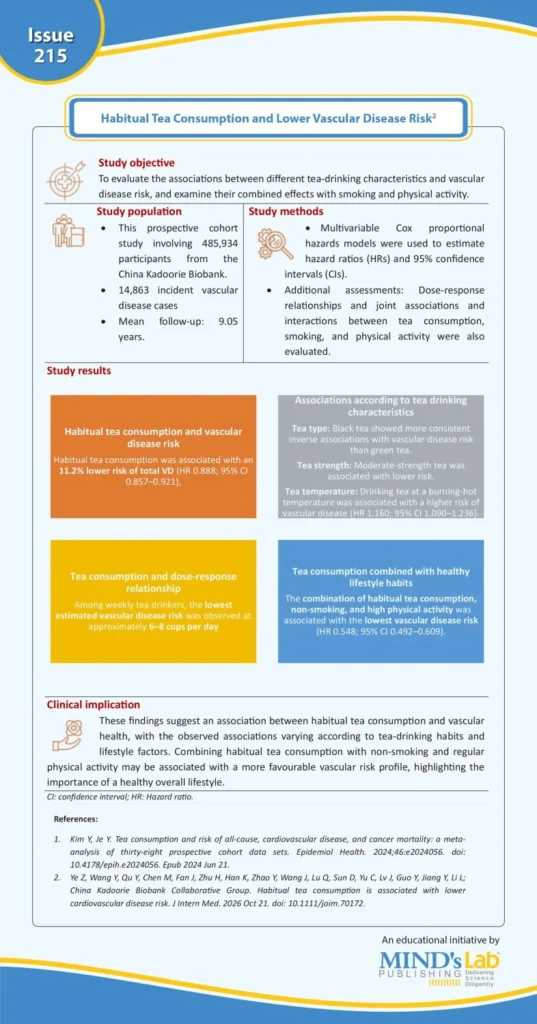
A recent study published in the Journal of Internal Medicine investigated the association between habitual tea consumption and cardiovascular disease risk using data from 485,934 participants in the China. Over a mean follow-up of 9.05 years, habitual tea consumption was associated with an 11.2% lower risk of total vascular disease. The association varied according to tea-drinking habits, with black tea showing more consistent inverse associations, while consumption of burning-hot tea was associated with an increased risk. These findings highlight the potential relationship between tea consumption patterns and vascular health, although the observational design does not establish causality.