


Pain is a leading cause of years lived with disability globally. However, unlike many other significant health conditions, it lacks an objective biomarker and cannot be evaluated independently of patient self-report. Consequently, estimates of its population-level burden are influenced by how pain is identified and documented across studies and healthcare systems. Current assessment frameworks, including the Global Burden of Disease (GBD) study, primarily use clinically defined conditions and modelled estimates of heterogeneous data sources. These approaches may not fully capture pain that does not enter formal diagnostic pathways, particularly in settings with limited access to healthcare.
Self-reported pain is widely captured in population-based studies; however, the data remain inconsistent and difficult to compare because of variations in assessment instruments, recall periods, anatomical classifications, and study designs. This heterogeneity is reflected in the reported prevalence of pain, which ranges from 8% to 64% across studies. Despite the availability of these data, important gaps persist in understanding how pain prevalence varies across the lifespan and how age-specific patterns differ according to pain phenotype, sex and geographical region.
A recent global analysis published in Nature Medicine, involving 6,125,459 participants across 118 countries, harmonized self-reported pain data at 11 anatomical sites to establish global reference trajectories of pain across the lifespan. The findings revealed that women consistently reported higher pain prevalence than men across all 11 anatomical sites, and that pain prevalence increased most steeply before age 55 years.
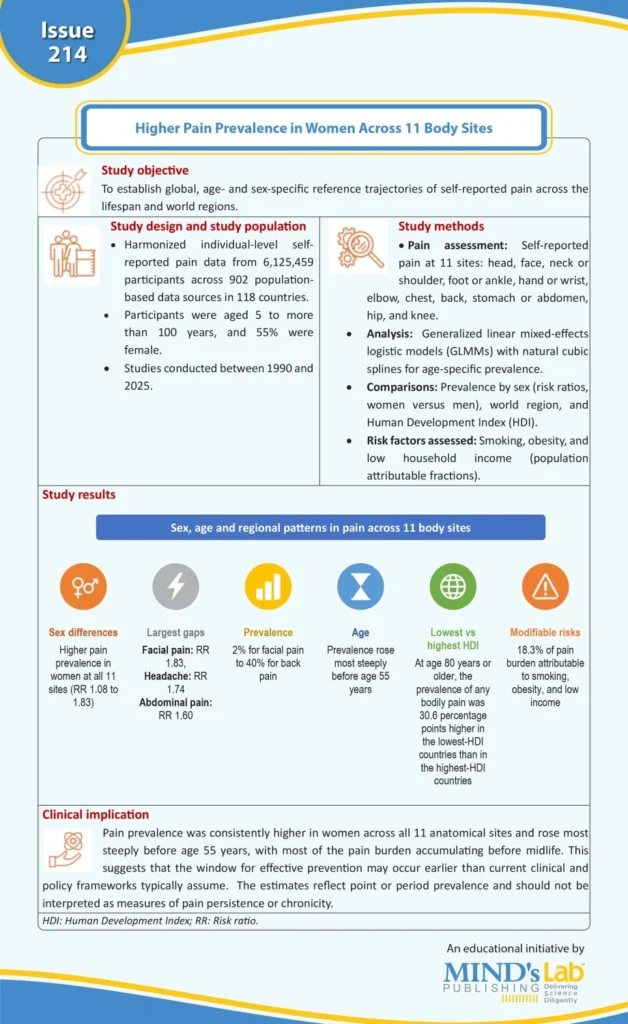
Source: Fillingim M, Tanguay-Sabourin C, Neuert L, et al. Global and regional reference curves for pain across the lifespan in 6.1 million individuals in 118 countries. Nat Med. 2026 Oct 5. doi: 10.1038/s41591-026-04696-w. Epub ahead of print. PMID: 42834228.